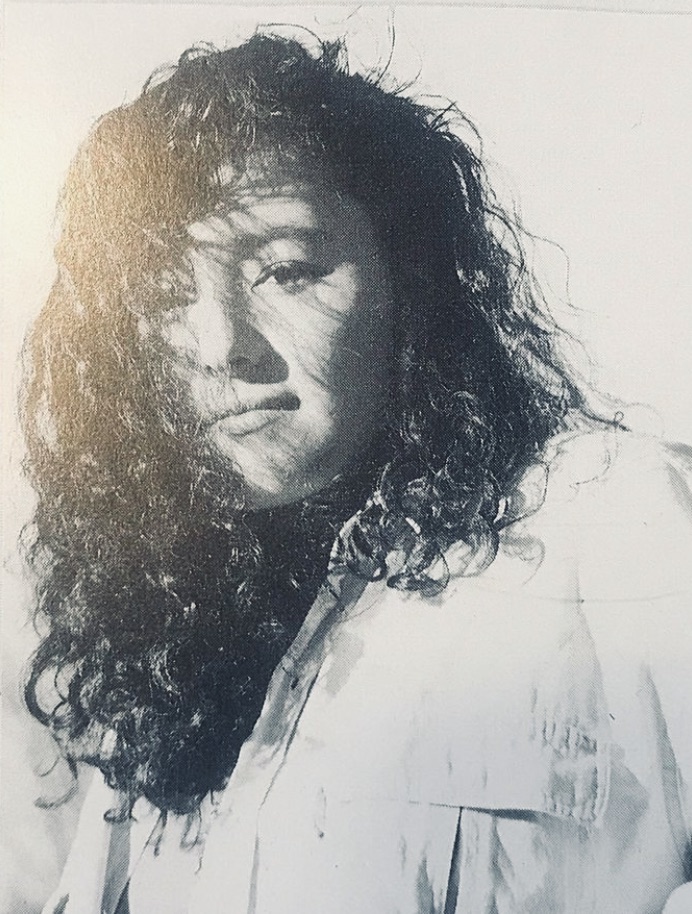
Children of Shimá

Now, more than ever.

Ever since I was little, I craved the guidance, mentorship, and leadership of women—of wise, old and beautiful women. As a little girl, I loved my grandmother’s hands. She would complain to me about her “ugly old-age spots,” but her wrinkled and spotted hands were to me, beautiful. They held mine warmly, with love and kindness. They gave me the world’s best chocolate-chip cookies, miniature shoes her mother had collected, and hugs.

And now, more than ever, I crave the kindness, wisdom, love and leadership—of women. I crave a world in which old women, with their soft, worn, and strong bodies of age are acknowledged for their beauty and for their power. I crave a world where grandmothers are government.

I am grateful to my mother, my grandmothers, and their mothers… to the many wise women teachers I’ve had… and to shimá (“my mother” in Navajo, implying both a personal and collective mother). The tremendous hardships they faced in life did not diminish their love and capacity to give, but deepened it. May I walk bravely in their footsteps…

now, more than ever.
Matriarch

four generations, and counting
they come and they go
but they always return, home
to this place of beauty

a door to the east opens with dawn
and she feeds all the hungry children
the cats and dogs, the sheep, cows, horses and chickens
and on the stove, boiling tea and fry bread
for the strays who visit
hungry for stories, ritual, medicine, and ceremony

she laughs easily and cries easily
sharing her heartful with tenderness and pain
the stories of the people
the land and the ancient ones
her memories strong in the bright arch of blue day

and into the quiet glow of dusk
all the busy sandpink footprints are swept
and the table cleared
while her shy, slightly awkward, and more or less vegetarian daughter
prepares salad, fried vegetables, and rice
her daughter
from that small floating island country far to the west
smiles softly for shimá

in the dark nighttime of dreams
and in the firelight of a winter ceremony
her daughter was called home
to heal and be healed, together
long centuries of a battered land
scarred and broken under the crushing weight of greed
and the submerged continent of the massacred

but she stands firmly
on the ground of her mothers
and her mothers' mothers
with offerings of pollen and song
a door to the east opens with dawn
and she feeds all the hungry children

who like me
return
again and time again
to shimá


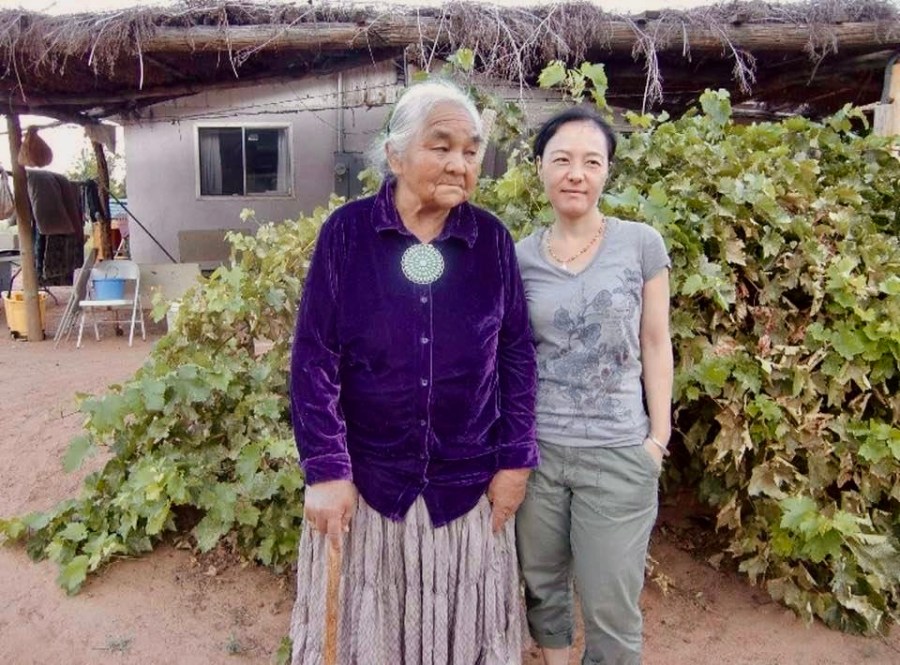
In trying to write about the background and inspiration for the poem above, I found that it cannot really be done. It would be to contain the ocean in a tea cup, or to capture the sky in a butterfly net. There is no encyclopedic text which could adequately describe or explain the entirety of what shimá, a Navajo word translated as “my mother” means… and what shimá means to me. But I can tell you that I am eternally grateful to the woman who I am standing next to in the photo above, who is shimá. And although shimá “walked on” a couple years ago, she guides me still—in my heart and in all that I have become. It is for her and because of her, that I wrote Matriarch.

As I was struggling to write about Matriarch, however, another poetic passage emerged. Apropos, Matriarch birthed a new poem! I wonder how this one, like a little child, will still grow?

On this land, we walk the path of beauty. 
The sacred breathes through our bodies, and breathes throughout all that there is.
We are beings of fire and coral sand, of summer rain storms and the unfurling green...
we fly on the wings of song and through endless skies of blue light.
We dance.
We are diamonds in the night.
And together with the land, we are hózhó.
We are home.